
It’s that time again. Summer brings us four new SMC interns, a new SMC postdoc, and a new pre-doc research assistant! In their work, you’ll see reflected our shift towards AI and data, but also many of the persistent concerns of the SMC: the implications for media, discursive imaginaries around new technologies, data and justice, communities and governance, and social and organizational norms. Welcome, everyone!

Talia Berniker (she/her) is a PhD student in the Department of Communication at Cornell University. Her research examines how emerging technologies are represented in policy and popular culture and are used in cultural production and creative industries. At SMC, she is exploring the use of generative AI in the radio industry.

Syboney Biwa is a PhD student in the Department of Communication at the University of Oklahoma. Her research is focused on cultural influences on technology adoption in organizations within cross-cultural contexts. Currently, she is working on the influence of organizational culture and employee networks on AI adoption in enterprise settings. Syboney approaches technological change as a complex organizational phenomenon requiring attention to communication, culture, and human factors as key elements driving organizational change. Syboney’s research is guided by her 10+ years of experience as a Business-Systems Analyst, and Change-Project Manager leading enterprise technology transformations at major financial institutions in Namibia. Her goal is to bridge the gap between AI research and praxis and in doing so offer valuable cross-cultural insights into the evolving conversation about AI, technology adoption, and organizational change management.
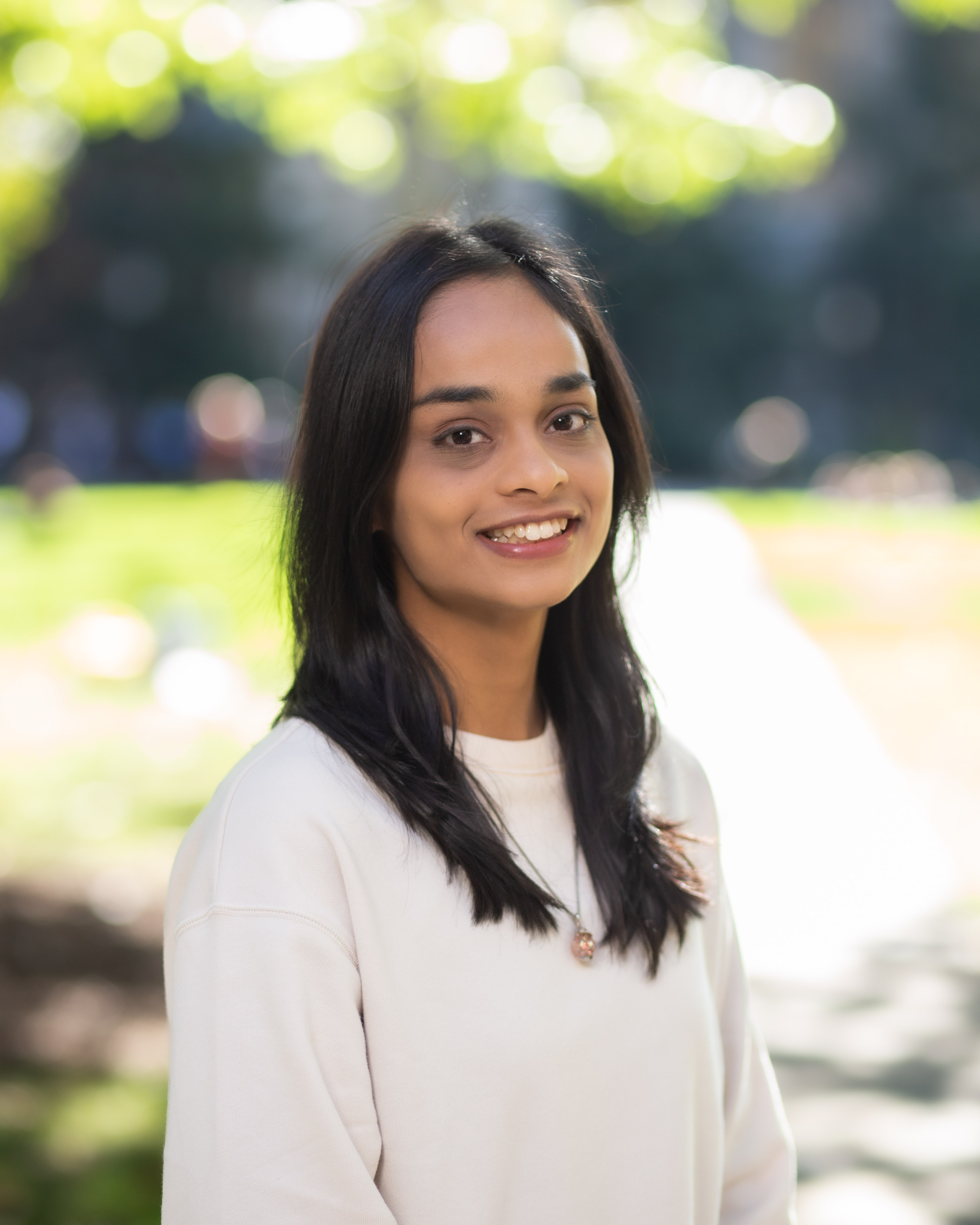
Manasa Jagadeesh (she/her) is a recent Masters graduate from the School of Information at the University of Michigan. Her Masters thesis sought to understand how the values that shape the daily work of the India Stack project contrasted with the governmental messaging behind its development. She is broadly interested in how community and user-centered methods can inform the development and governance of emerging technologies, especially in the Global South. Most recently, she worked with the United Nations Development Program to create policy documents to further digital transformation efforts in countries across the world. She is interested in exploring this intersection of technology and society through research, advocacy, and practice. In a previous life, Manasa was a software engineer.
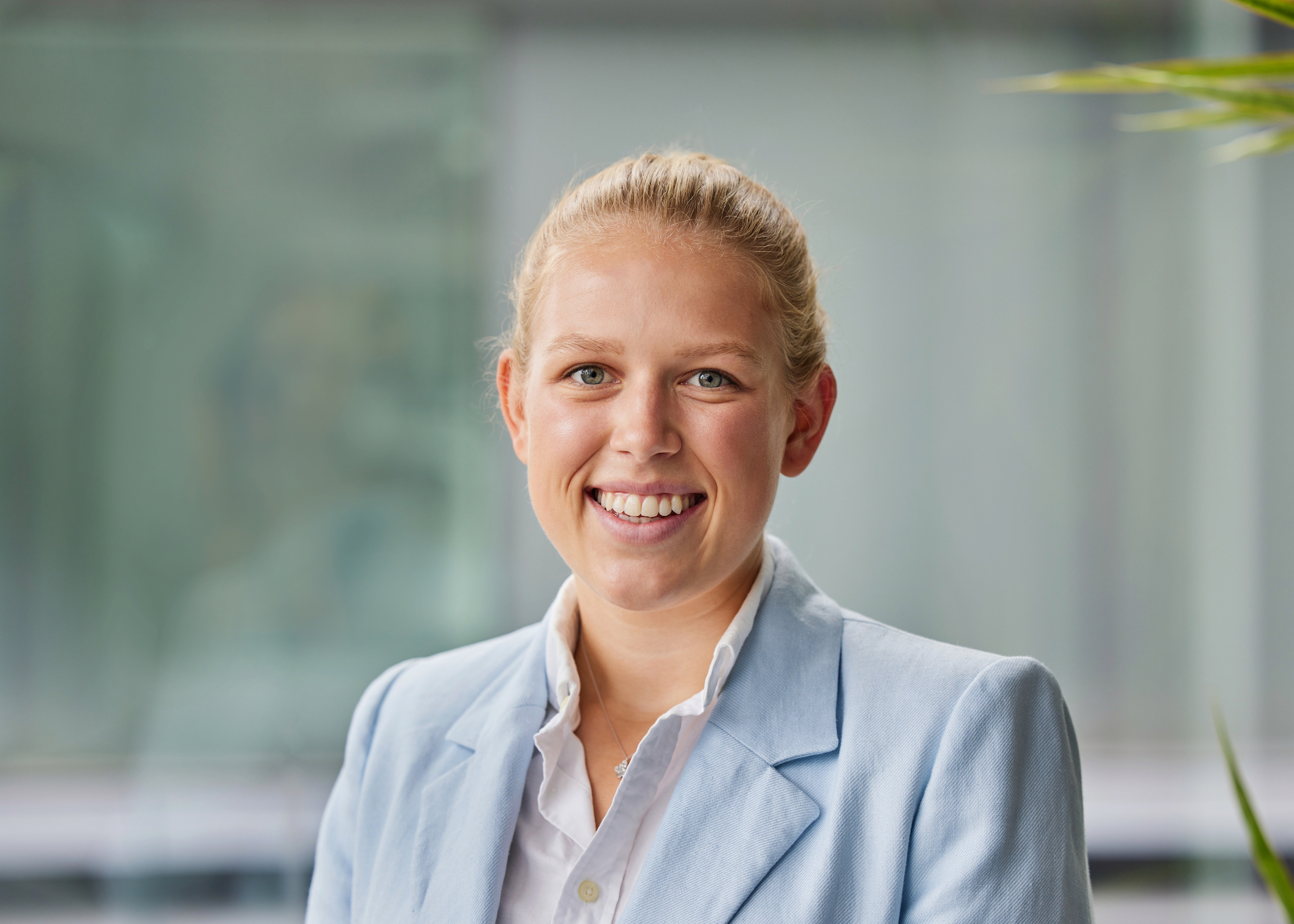
Cecile Meier-Scherling is a Ph.D. candidate in Computational Biology at Brown University, co-advised by Dr. Lorin Crawford and Dr. Jeffrey Bailey, and a Frontera Computational Science Fellow. Her research focuses on developing interpretable machine learning and probabilistic models to understand the spatial and temporal spread of genomic variation, with a particular focus on antimalarial drug resistance. She integrates multi-omic sequencing data, human mobility patterns, and health outcomes to uncover how resistant parasites evolve and spread to inform strategies for surveillance, intervention, and treatment. Cecile earned her B.S. in Biomedical Engineering from Boston University, where she conducted her senior thesis with Dr. Muhammad Zaman on modeling healthcare access in Native American communities in South Dakota. She also conducted research at Dana-Farber Cancer Institute with Dr. Franziska Michor and Dr. Simona Cristea, developing machine learning models to predict mutational evolution across diverse cancer types. Beyond research, Cecile is deeply committed to science policy and international collaboration. She served as co-chair of the German American Conference at Harvard and now leads its affiliated non-profit, fostering transatlantic dialogue between the United States and Europe through policy engagement, public events, and student outreach.

Kate Metcalf (she/her) is the SMC’s newest postdoc. Her work focuses on the politics of the data-intensive health and life sciences, and particularly -omics research. Kate recently earned her PhD in Communication and Science Studies from the University of California, San Diego, where her dissertation examined how big data biobanks are reshaping knowledge production practices in human genetics. Spanning approaches from ethnography and archival studies, Kate’s projects seek to understand health data not only as ethically sensitive, but as socially mediated, historically contingent, and fundamentally relational. In doing so, her research centers questions of epistemic power and data justice in the development of biomedical technologies. Kate’s work has appeared in journals including Social Studies of Science, Big Data & Society, and Surveillance & Society, and has been supported by the National Science Foundation. After her postdoc, Kate will join the faculty at the UC Berkeley School of Information.
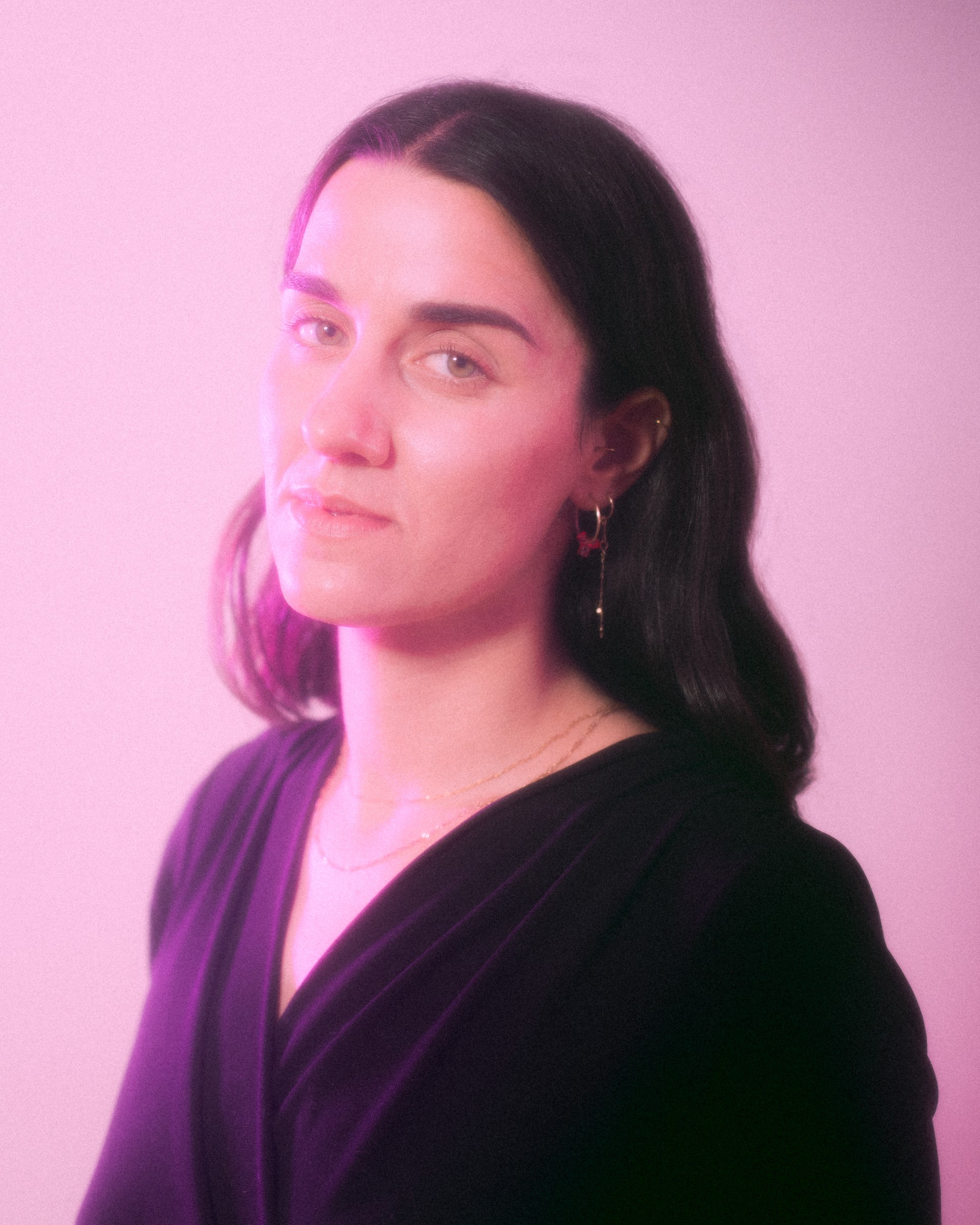
Leona Nikolić is a PhD candidate in Communication Studies at Concordia University in Montréal, where she is a member of the Machine Agencies research group at the Milieux Institute for Arts, Culture, and Technology, as well as a member of the Media History Research Centre. Leona earned an MA in Communication Studies (Experimental Media) at the Université du Québec à Montréal and a BA in Art History at Carleton University. Her doctoral research examines the relationships between artificial intelligence and astrology as speculative modes of prediction and forecasting and the historical interdependencies between astrology and computation. At the SMC, Leona is working with Nancy Baym to explore the technocultural implications of magical discourse, design, and branding of generative AI models.
 Social Media Collective